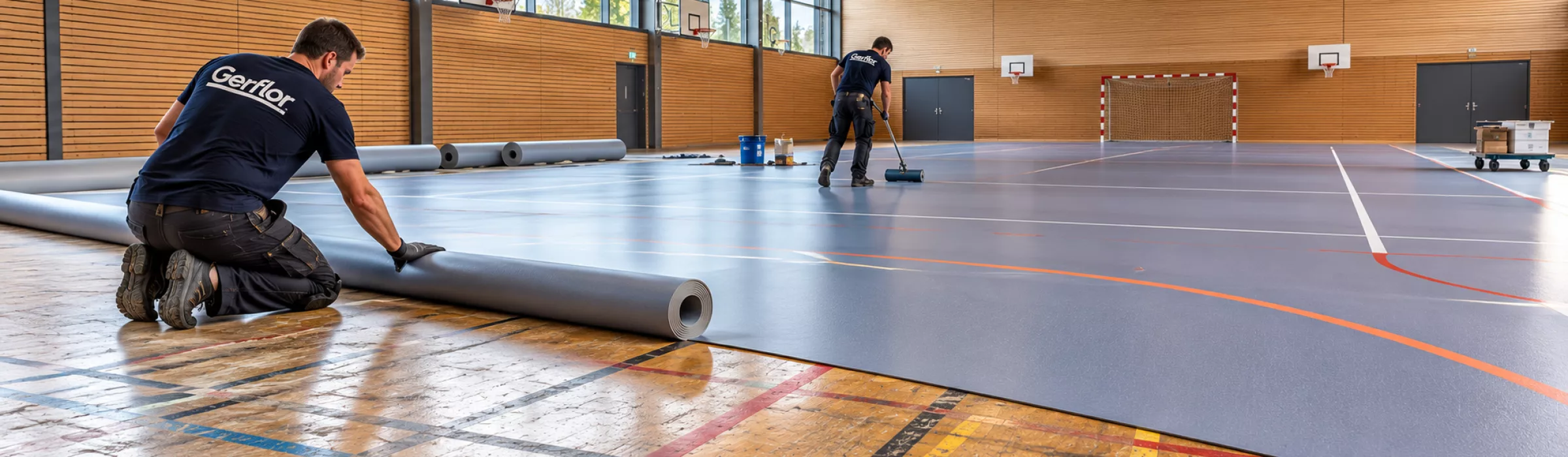
In a sports facility almost everything can be replaced without closing: a machine, a goal, a light fitting. The floor cannot. Replacing it means emptying the hall, lifting what is there, waiting for laying and curing times, and reopening weeks later. That is why it is the item on which we advise against trading down.
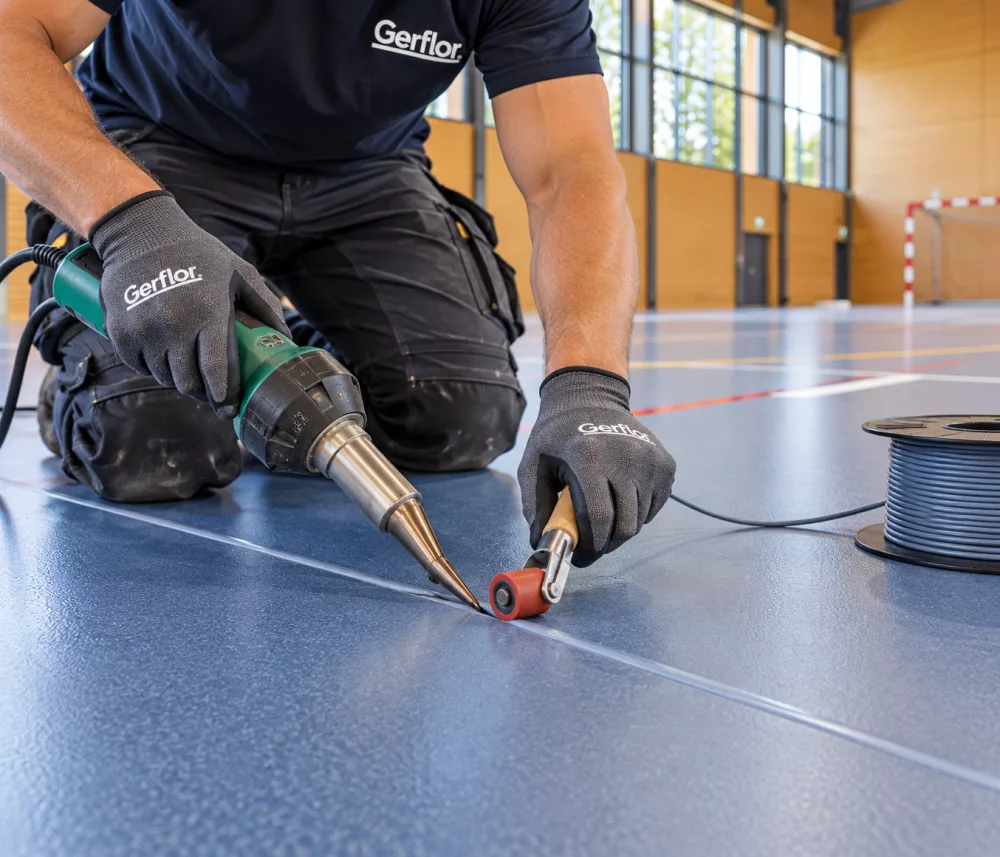
Sports flooring is chosen on the activities, and the list is longer than people think: shock absorption for the joints, energy return, slip resistance - which must allow a pivot without causing a fall - ball rebound, and resistance to point loads from telescopic seating and wheeled equipment. Gerflor makes these floorings, and it is the range we lay most often in halls and gyms.
The uses contradict each other, and that is where the advice lies. A highly absorbent floor is comfortable for a gymnastics class and penalises a basketball match, where the ball has to bounce. A multi-use hall is therefore always a trade-off, better made explicitly against the real timetable than suffered on discovering that the floor does not suit the dominant activity.
The substrate decides the outcome as much as the covering. Levels, residual moisture in the slab, rising damp: a covering laid on a substrate that has not been tested blisters or lifts, and the manufacturer's warranty does not cover that. We therefore test before pricing the supply, and we say so when it calls for remedial work.
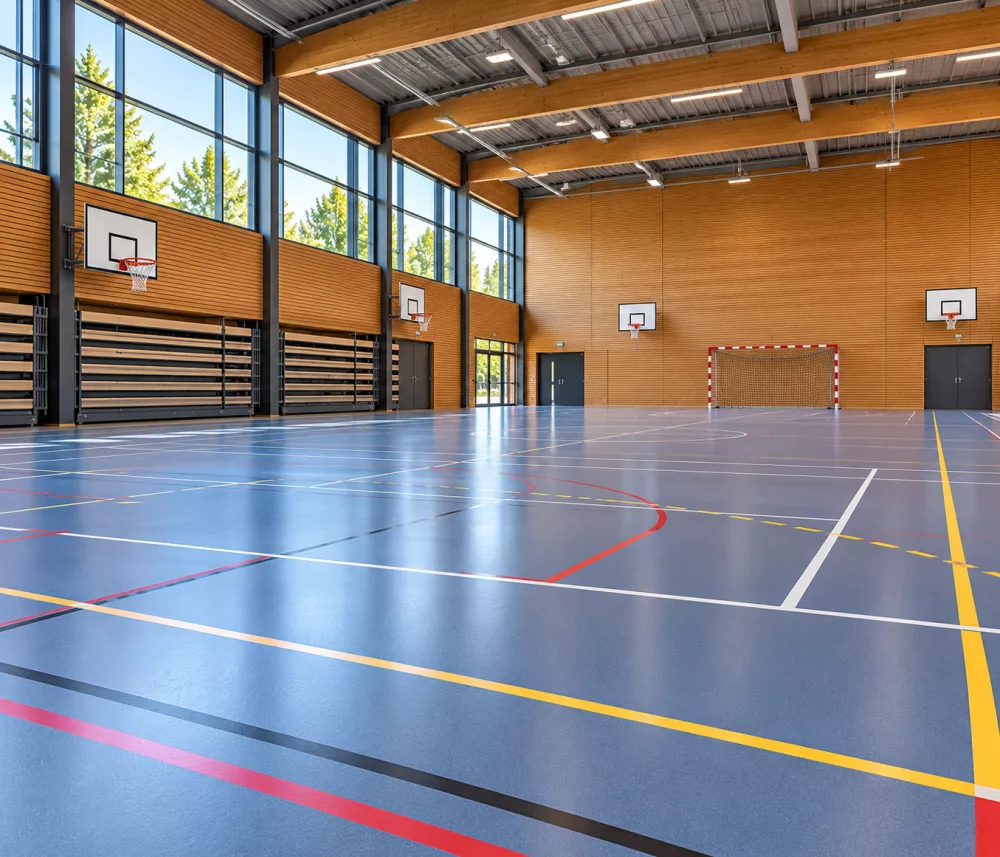
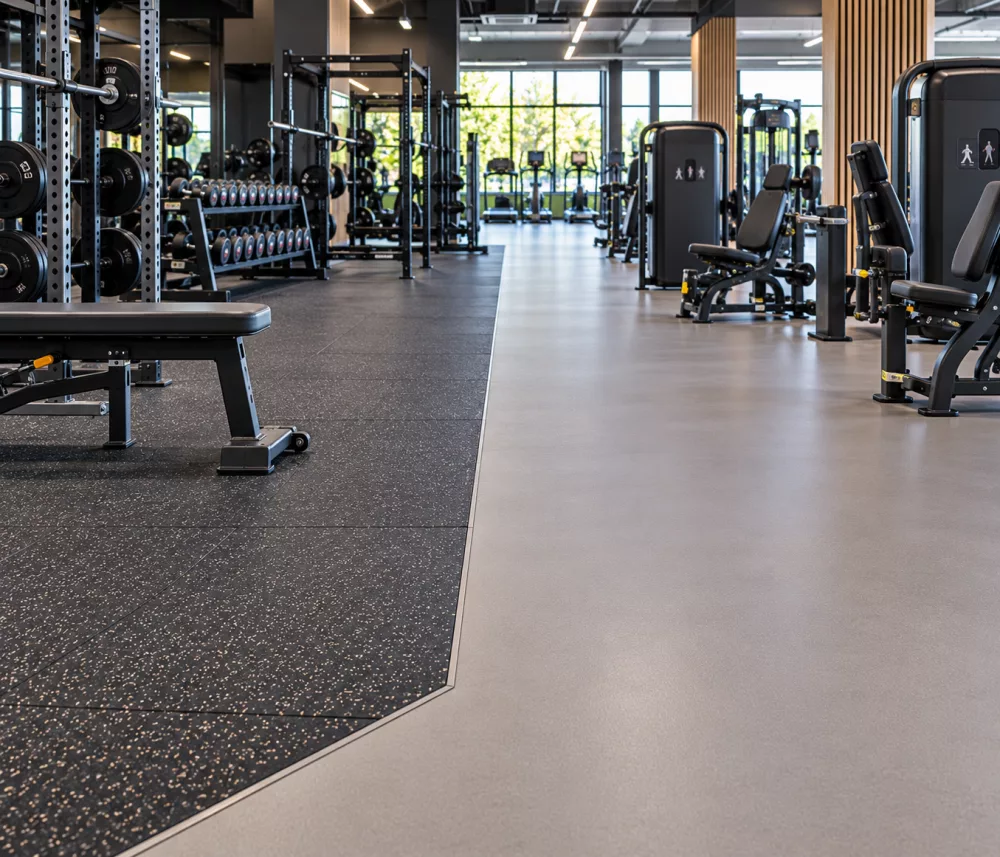
Line markings are decided last and lived with for twenty years. Too many lines make a hall illegible; too few mean reaching for the tape at every match. We start from the real list of disciplines hosted, and we rank it. See multi-sports spaces and fitness and cross-training, and the installation and maintenance pages.