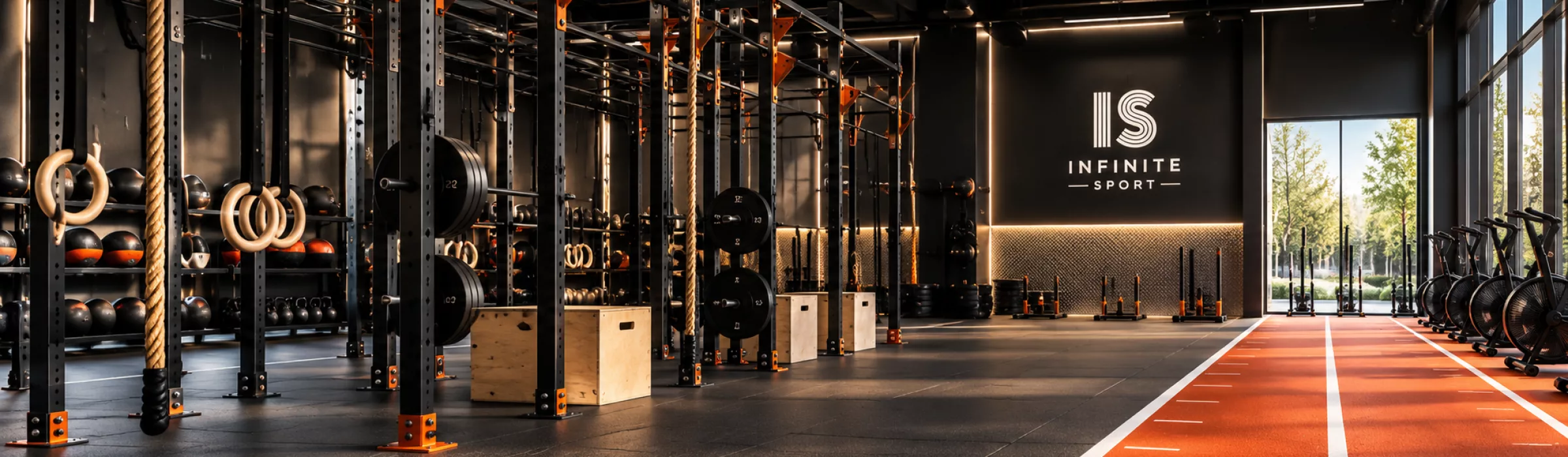
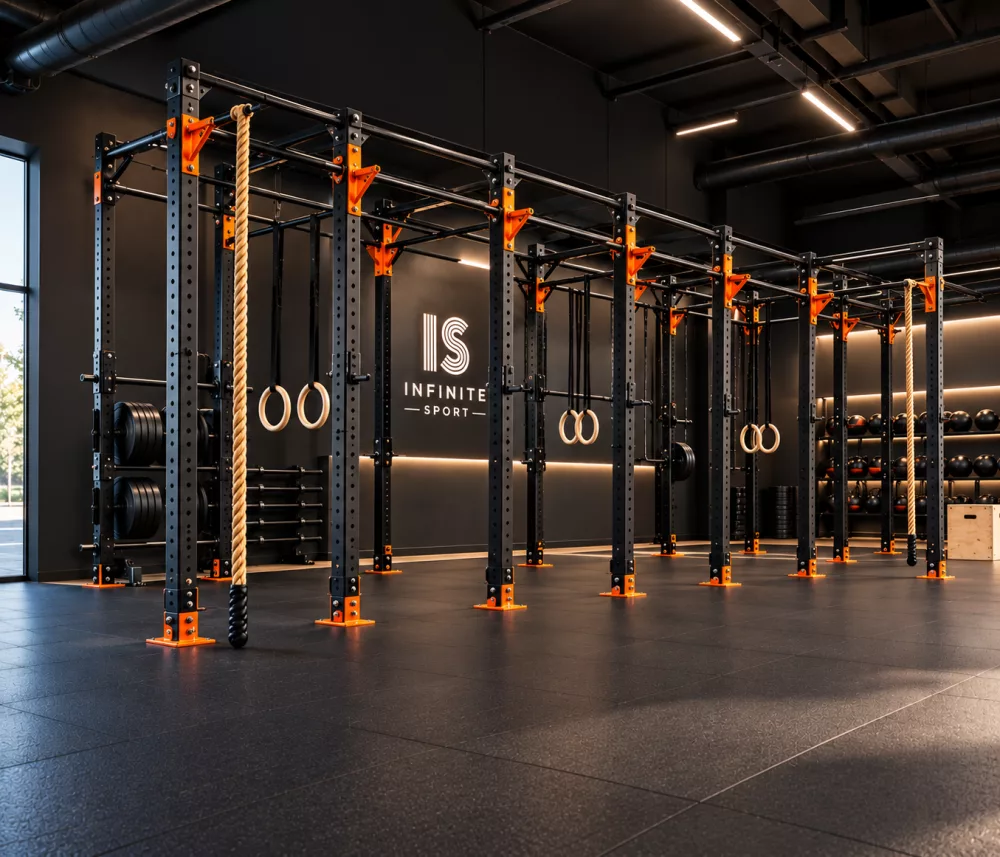
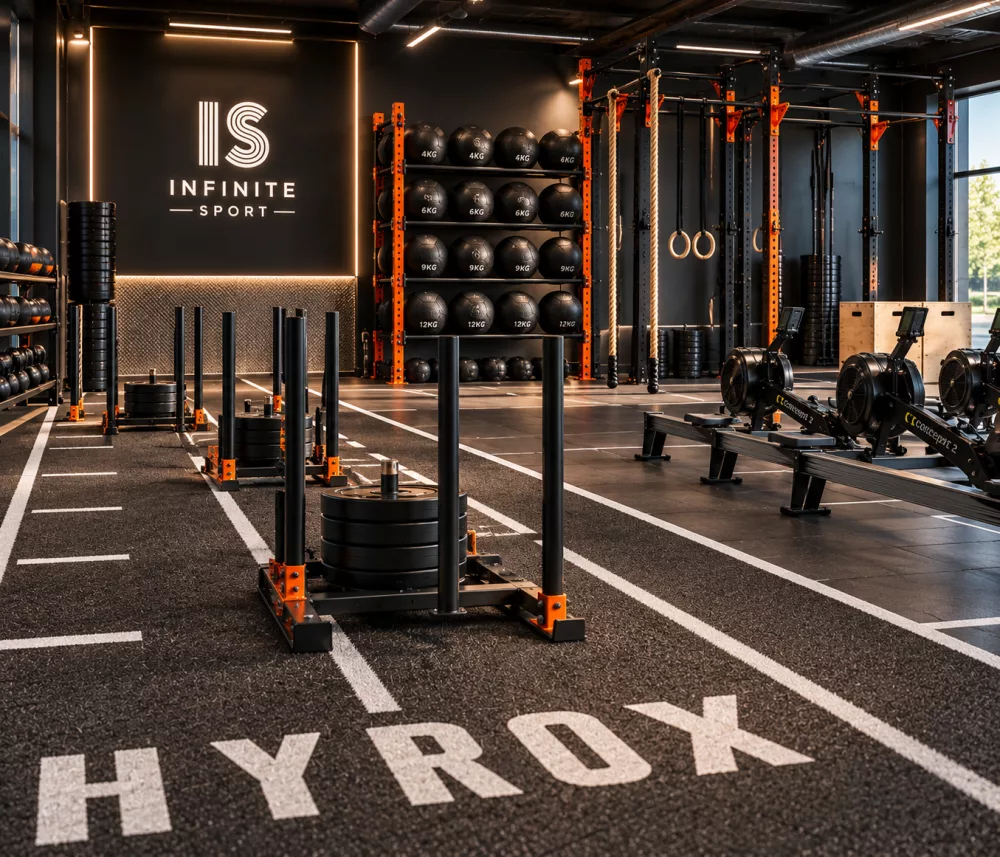
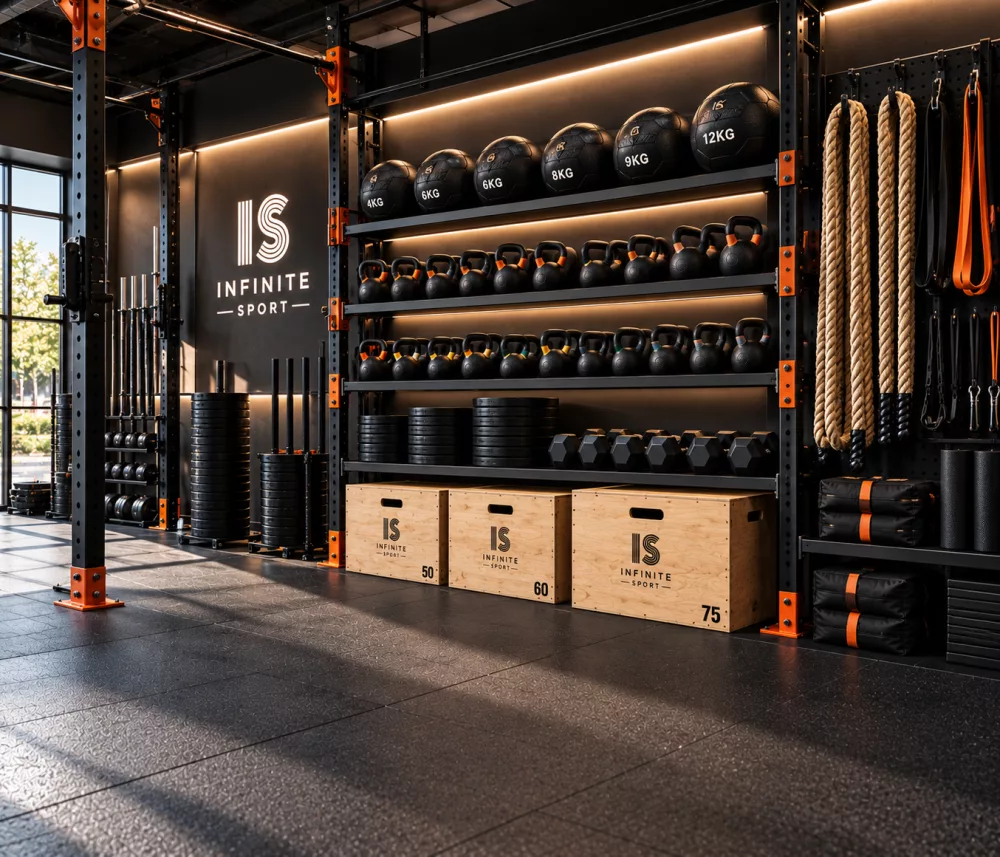
A cross-training area follows almost the opposite logic to a weights floor: it needs empty space. Height for overhead movements and ropes, length for shuttles and sprints, and clear floor area, where a traditional gym tries to densify.
That is precisely what a catalogue cannot do. A standard rig comes in fixed lengths, and it rarely falls right between two columns, under a purlin, or along a wall that is not square. Infinite Sport came out of that: we draw cross-training equipment to the dimensions of the room, and we produce it in our workshop.
Hyrox has changed the demand in two years. A gym wanting to host that format needs a usable running loop, identical stations in sufficient number, and specific apparatus - sled, wall ball, rower - each with its own footprint and clearance. It is not one more rig, it is a different floor plan, and it is drawn before anything is bought.
The building decides before the equipment. A rig anchored to the floor, a frame fixed to the roof structure, rings or ropes suspended: these are not static loads but dynamic forces, which load a purlin quite differently from a resting weight. We survey the structure and calculate the reaction before drilling anything - better known before ordering.
The drop zone is the most expensive feature to deal with after the fact: a dedicated, thicker floor, and often acoustic isolation if the gym is upstairs or shares a wall. It is the kind of detail that, untreated, ends in a neighbour dispute six months after opening. See fitness and cross-training, and our projects.