A gym floor runs twelve hours a day, seven days a week, with users who spare nothing because it is not theirs. The bearings, cables, upholstery and finishes of professional strength equipment are sized for that, and for scheduled servicing - it is the only difference that counts, and it does not show in a showroom.
Shua makes this strength and cardio equipment, and it is what we supply and install on most gym floors. We say plainly what a fleet consumes in wear parts over five years: it is a budget line projects systematically forget, and it is discovered at the first cable to be changed.
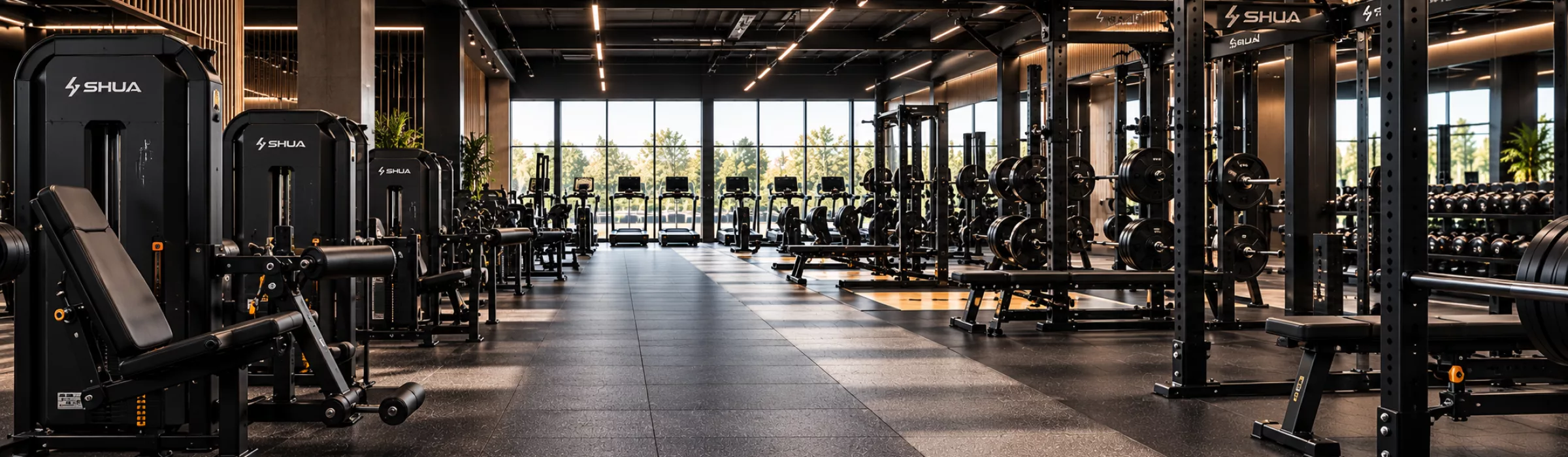
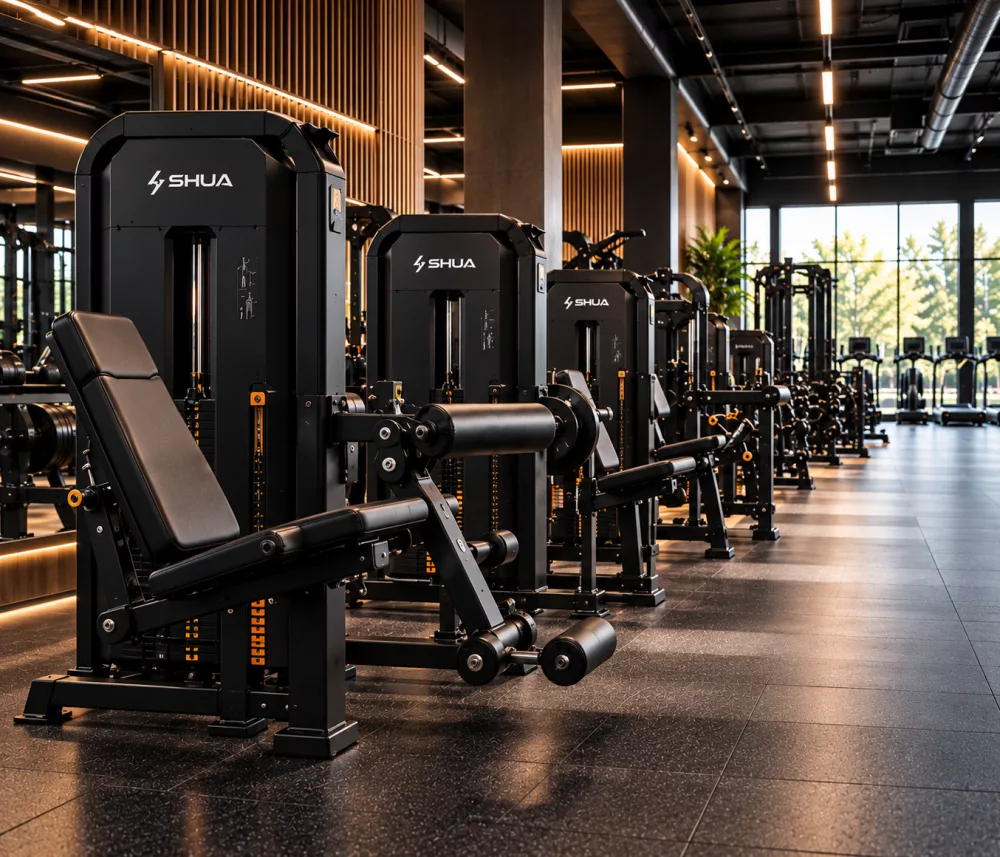
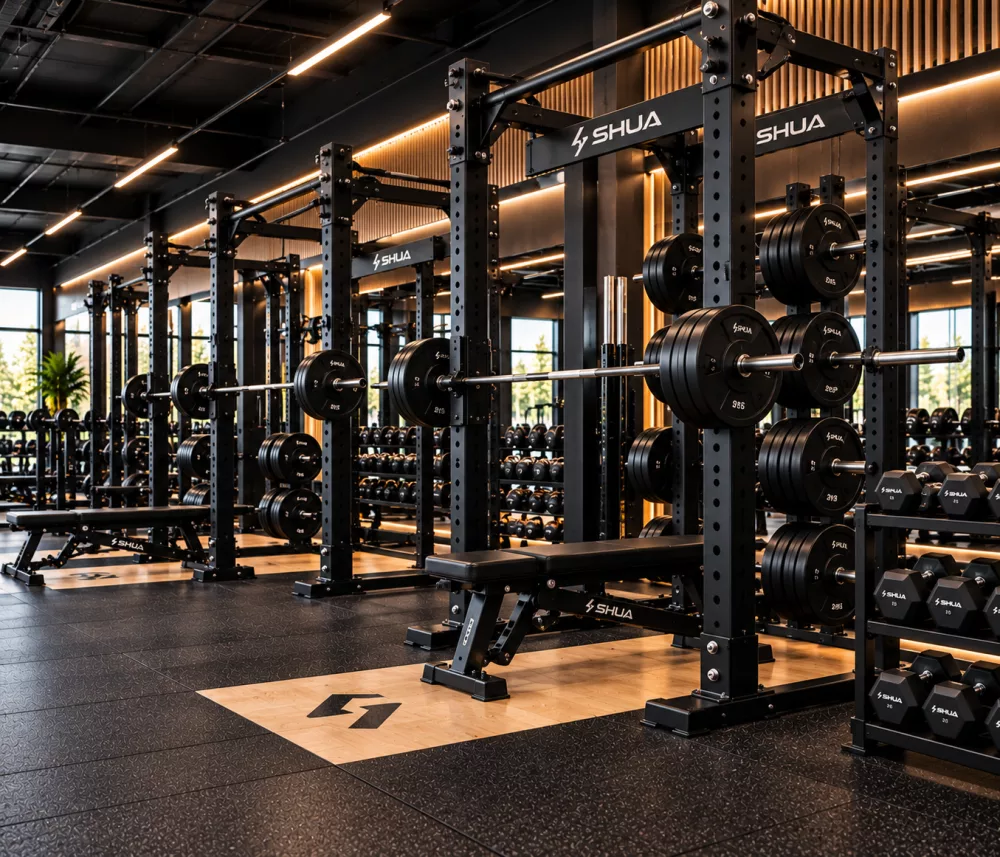
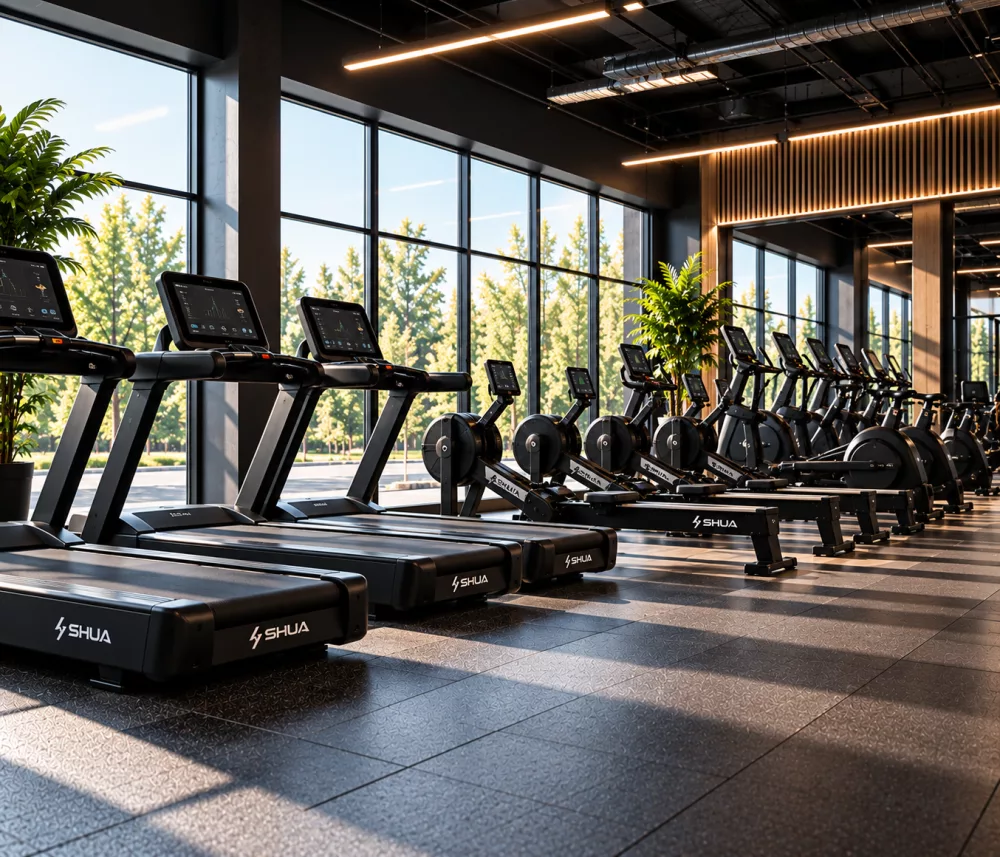
A gym floor has three zones with distinct needs. Free weights, which need the thickest floor, the anchors and the height. Selectorised machines, denser and less demanding on the floor but hungry for circulation. Cardio, placed according to ventilation, power points and views - nobody wants to run facing a wall, and the power supply is dealt with on the drawing, not after installation.
Layout is judged on circulation as much as on the machines. A dense floor looks profitable on a drawing and becomes unbearable in use: you need the width between two rows, the clearance behind a rack to step back, the real room to load and unload a bar without getting in the way of the next station. We draw those clearances before placing the equipment, not the other way round.
The order of assembly is not up for discussion: floors first, then anchors, then the heavy machines, mirrors and finishes last. Swapping two stages is expensive - a mirror fitted before the machines arrive gets scratched. See fitness and cross-training, installation and delivery.