Skip to content
Français Current language : English
Start my project
Hags

Brands

Hags

Play equipment and playground furniture: the range found in public parks, built to last under use nobody controls.

Brands

A public playground has no opening hours

Park equipment is used unsupervised, by every age, at any hour, by a number of people nobody counts. That is a constraint of a different nature from a club's: there is no reception, no house rules, no member to hold to account. The equipment therefore has to cope on its own.

Hags makes play equipment and playground furniture sized for exactly that use, and it is what we install on municipal schemes and residential developments. Wear parts and fixings can be replaced without dismantling the structure, which sounds secondary until the day a whole playground has to be closed to change one part.

Compliance turns on two standards and on a surface. The EN 1176 series sets fall heights, safety zones and the gaps that prevent entrapment; EN 1177 sets what the impact absorbing surfacing must take for a given height. A compliant structure on an inadequate surface is no longer compliant, and that is the defect we meet most often on existing playgrounds.

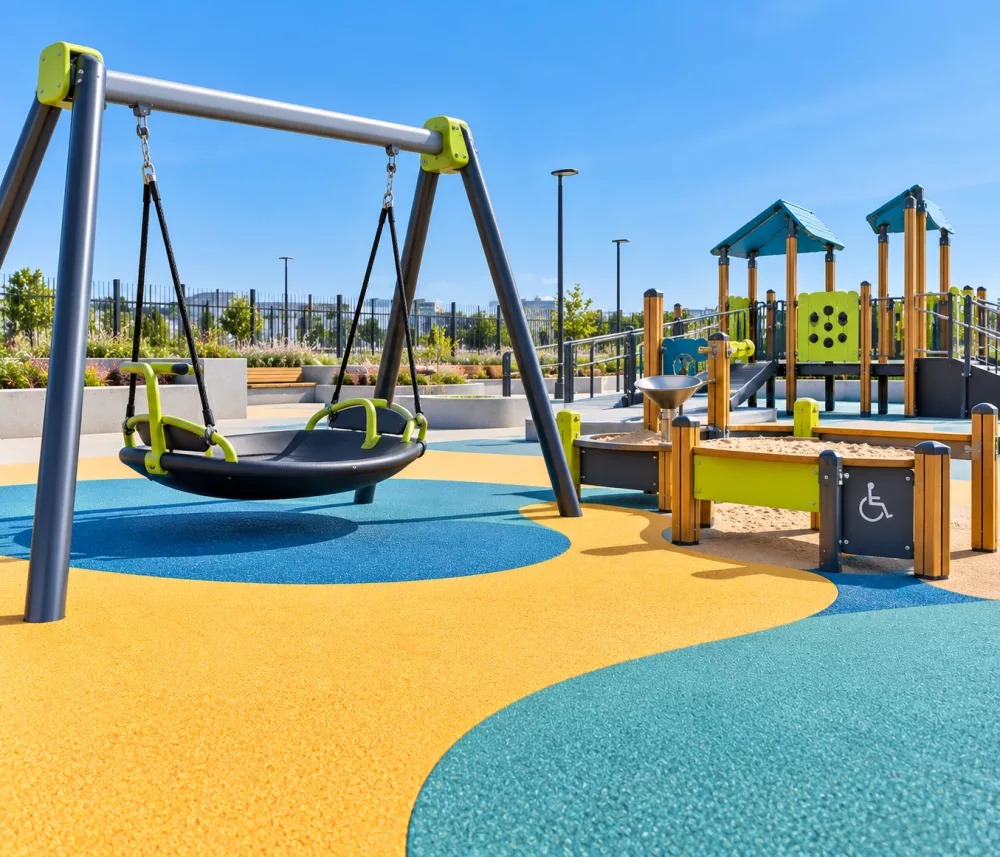
Accessibility goes beyond mere compliance. A poured surface is wheelchair-navigable, bark is not; paths that serve the equipment are better than a perimeter path; and distributing accessible items beats grouping them in one corner. An inclusive playground is a better-used playground, by a wider public. See playgrounds.

For schemes that want a timber language, we install both ranges in the same project, see Extebois. Periodic inspections - and the written record that goes with them - are set out on the maintenance page, and installation on installation.

The range

What we install

Multi-age structures

Multi-age structures

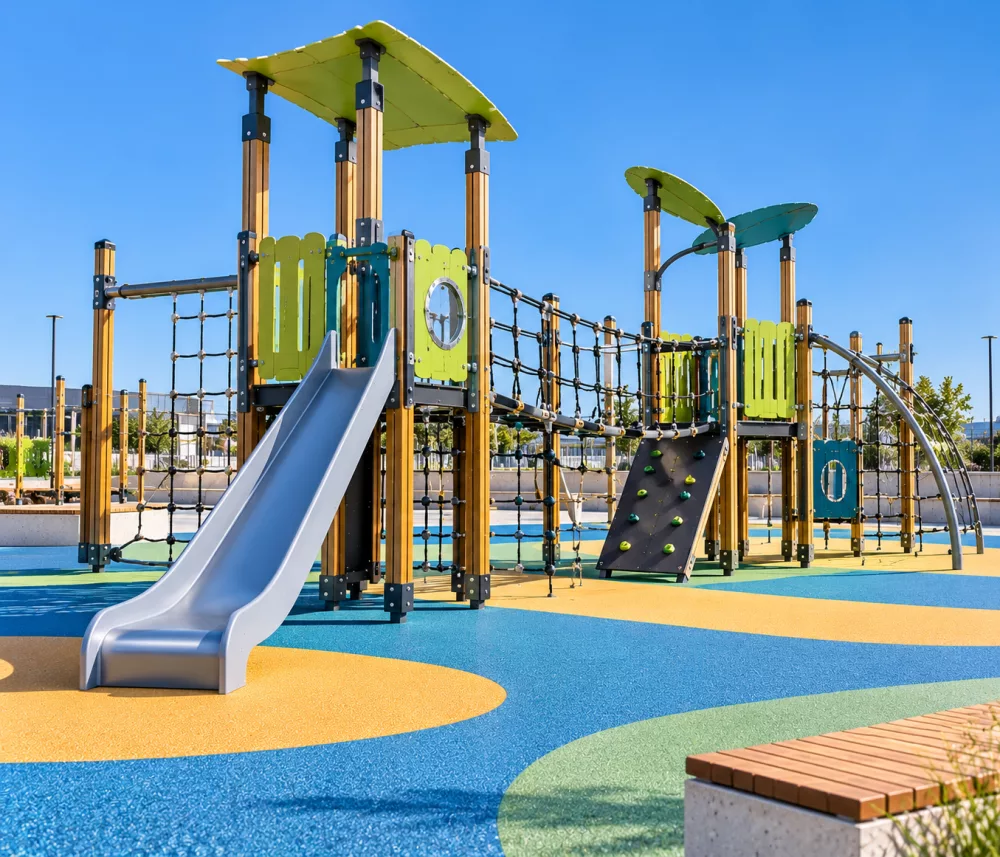
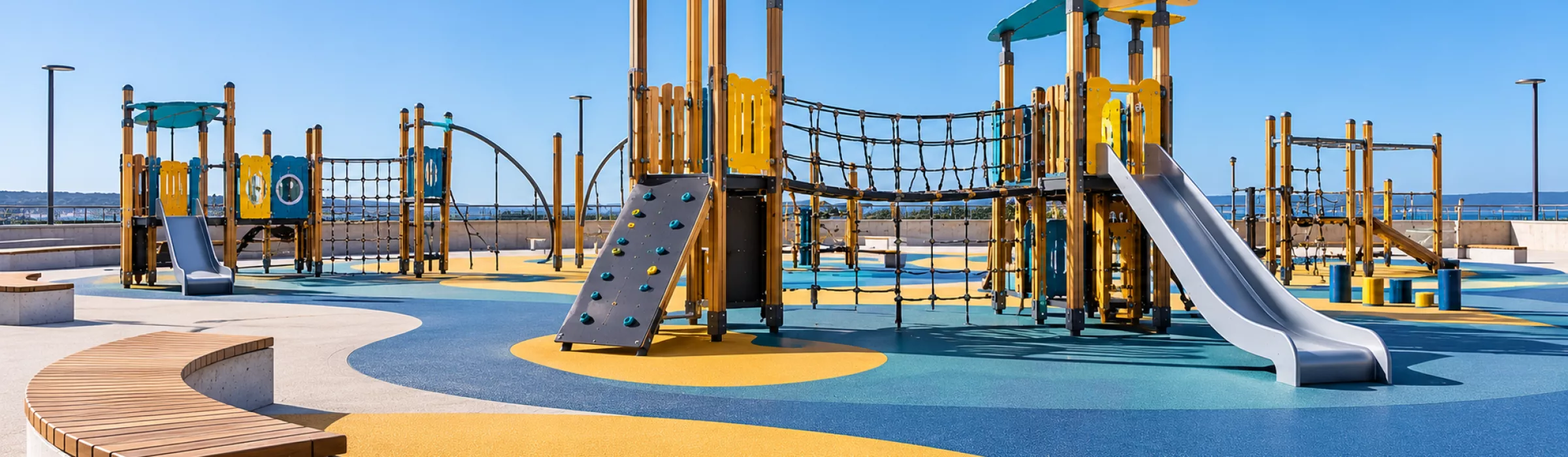
Towers, slides, nets, climbing items and modules for toddlers. The age range decides the fall heights, and the heights decide the surfacing - always in that order.

A playground aimed at several ages is better treated in zones than as a compromise: a single module for everyone suits nobody and it is the smallest who gets hurt.

Inclusive play

Inclusive play

Basket swings, sand play at wheelchair height, activity panels reachable from a seated position: equipment usable by a child who does not stand.

What really decides is the surface and the path. Inclusive equipment at the end of a bark path is not inclusive.

Furniture and fencing

Furniture and fencing

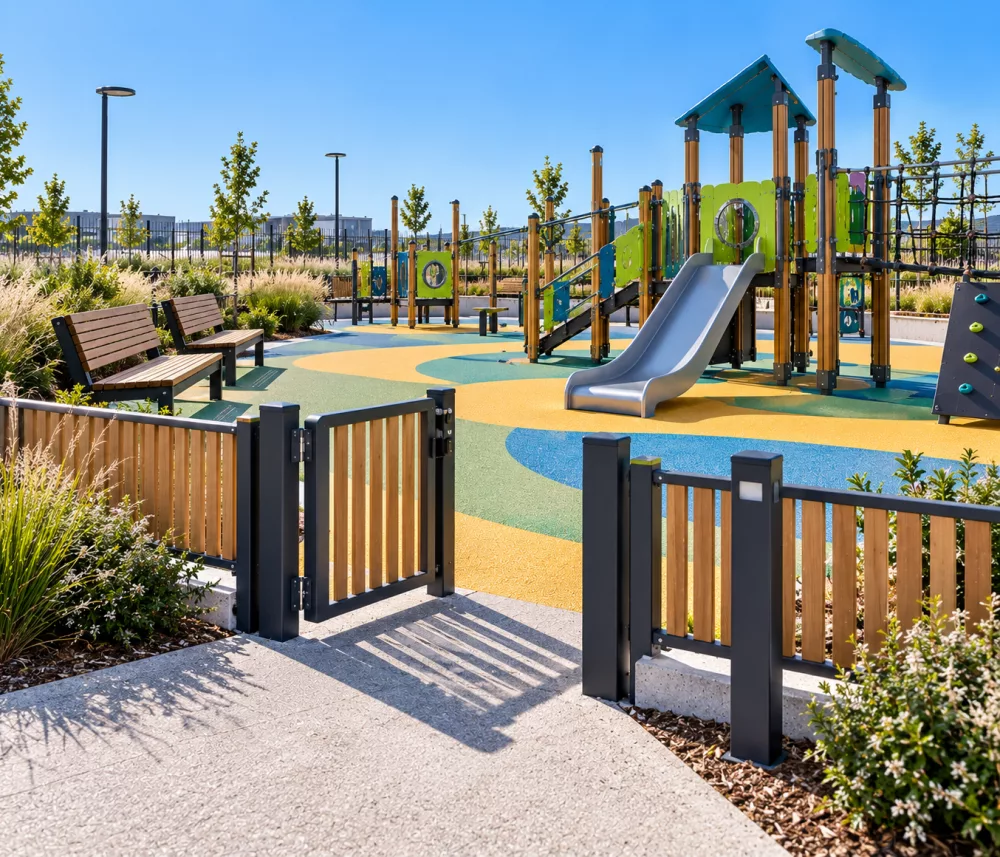
Benches, bins, shelters, low fencing and self-closing gates. The gate is what separates a playground from a road, and it is the first thing we are asked to replace.

Seats go where the children can be seen - and where the playground can be seen from the street, because equipment that cannot be seen gets damaged.

Good to know

Frequently asked questions

How often should a public playground be inspected?

A frequent visual check, a periodic operational inspection and an annual main inspection: that is the usual pattern, set against actual use.

What matters as much as the frequency is the written record. On public equipment it is what gets produced the day you are asked to account for it.

Which impact-absorbing surface?

The surface follows from the highest fall height on the playground, not from a budget. Poured, tiles or bark: all three exist, and all three differ in life expectancy and accessibility.

Bark costs less to lay and more to maintain, and it is not wheelchair-navigable. It is a trade-off, and it deserves to be put as one.

Can part of the existing equipment be kept?

Often yes. We survey what is there item by item and distinguish what is compliant, what can be refurbished and what has to go.

Keeping a non-compliant item to save money is the one trade-off we refuse.

Creating or bringing a playground up to standard?

Tell us the site, the age groups you have in mind and what is already there. We will tell you what has to be replaced first, and what it implies in inspections afterwards.

Talk about my project